
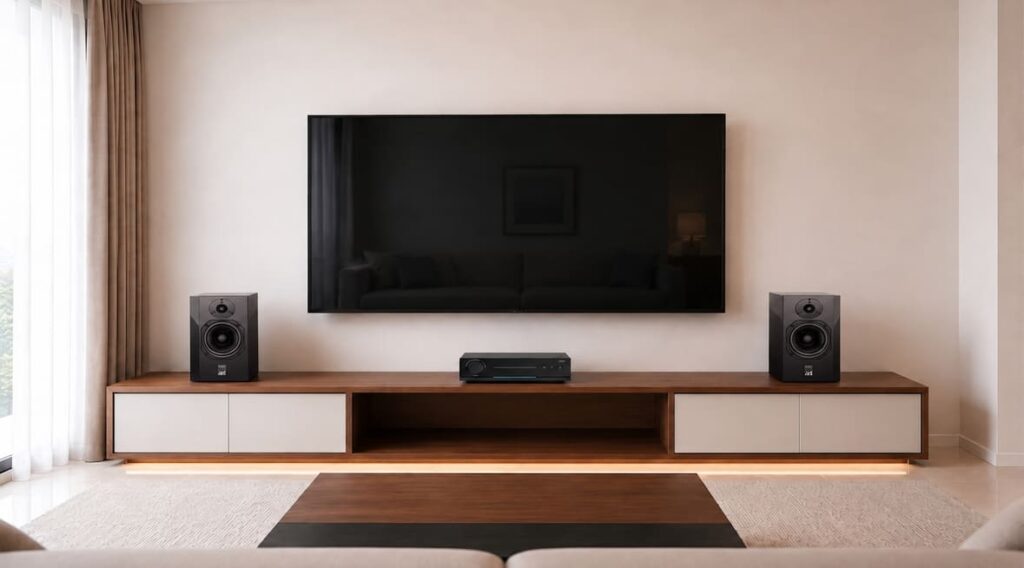
How to Choose the Right Audio System for Your Home: A Complete Guide
Choosing the right audio system for your home can be a challenging experience. With countless brands, speakers, amplifiers, streaming devices and system configurations available, it can be difficult to know which equipment is best suited to your needs.
Whether you enjoy listening to music, watching movies or creating a dedicated home entertainment space, the best home audio system is one that matches your listening preferences, room size, lifestyle and budget.
In this guide, SG Live Acoustics explains how to choose the right audio system for your home, including the differences between stereo and home theatre systems, speaker selection, renovation planning, room acoustics and what to listen for when evaluating sound quality.
1. What Is the Best Audio System for Your Home?
The best audio system depends on how you intend to use it.
Before choosing speakers or amplifiers, consider whether your main priority is listening to music, watching movies, or enjoying both.
Your listening habits will help determine the most suitable audio system configuration.
Home Stereo System for Music Listening
If you primarily enjoy listening to music, a dedicated two-channel stereo system is an excellent starting point.
A home stereo system typically consists of two main speakers—left and right—along with a suitable amplifier and audio source.
A well-matched stereo system can reproduce music with a convincing sense of:
- Soundstage and depth
- Instrument separation
- Vocal clarity
- Tonal balance
- Timing and rhythm
- Musical dynamics
The goal is to recreate the recording naturally, allowing you to appreciate the character of the instruments, vocals and performance.
For more advanced listeners, the choice of source, DAC, amplifier, speakers and cables can significantly influence the overall presentation. However, the components should always be selected as part of a complete system rather than in isolation.
Home Theatre System for Movies
If you enjoy movies, gaming and immersive entertainment, a home theatre system may be more suitable.
A home theatre system uses multiple speakers positioned around the listening area to reproduce directional sound effects and create a more immersive experience.
Depending on your requirements, a home theatre setup may include:
- Front left and right speakers
- Centre speaker
- Surround speakers
- Height or ceiling speakers
- Subwoofer
- AV receiver or processor
- Power amplifiers
A properly configured home theatre system allows dialogue, music and sound effects to be positioned around you, creating a more engaging cinematic experience.
The key difference: A stereo system prioritises two-channel music reproduction, while a home theatre system is designed to create a more immersive multichannel experience.
2. Can You Use a Home Stereo System for Movies?
Yes. A home stereo system can be used for television and movies, particularly if you primarily watch programmes, dramas or other content where clear dialogue and good sound quality are important.
However, a two-channel system will not reproduce the same multichannel surround effects as a dedicated home theatre setup.
Similarly, a home theatre system can be used to listen to music in stereo mode. The quality of the music playback will depend on the system’s design, configuration and component matching.
If you enjoy both music and movies, there are several ways to approach your system.
You could build a high-quality stereo system that also handles television and movie playback, or create a dedicated home theatre system with strong front-channel performance for music.
We recommend deciding which experience matters most to you before selecting your equipment.
3. How to Choose the Right Speakers for Your Home
Choosing the right speakers is one of the most important decisions when building a home audio system.
Speaker size, placement, room dimensions and listening distance all influence the sound you will experience.
Here are some of the most common speaker types.
Bookshelf Speakers
Bookshelf speakers are compact, versatile and suitable for a wide range of listening environments.
Despite their smaller size, a well-designed bookshelf speaker can deliver detailed and engaging sound.
They are particularly suitable for:
- Small living rooms
- Apartments and bedrooms
- Desktop listening
- Near-field listening
- Systems where space is limited
Bookshelf speakers are often paired with dedicated speaker stands to achieve the correct listening height and improve placement flexibility.
Floorstanding Speakers
Floorstanding speakers offer a larger cabinet and typically provide greater bass extension and a larger sense of scale.
They are well suited to:
- Medium and large rooms
- Dedicated listening spaces
- Music lovers who want a larger soundstage
- Systems where fuller-range performance is important
However, larger speakers are not automatically better. A speaker should be matched to the size of your room and your preferred listening distance.
In-Wall and In-Ceiling Speakers
Architectural speakers are an excellent choice for homeowners who want a clean, minimalist interior.
They can be integrated into walls or ceilings to reduce visual clutter while providing audio throughout the home.
These speakers are particularly useful for:
- New home renovations
- Home theatre installations
- Multi-room audio
- Whole-home audio
- Minimalist interior designs
Because architectural speakers involve installation and cabling, they should ideally be planned before renovation work begins.
Wall-Mounted Speakers
Wall-mounted speakers can be a practical solution for homes where floor space is limited.
They are suitable for living rooms, bedrooms, commercial spaces and other environments where conventional floorstanding speakers may not be practical.
The correct mounting height and placement should be considered carefully to achieve the best possible sound.
4. When Should You Plan Your Audio System—Before or After Renovation?
The ideal time to plan your home audio system is before renovation begins.
This is especially important if you are considering in-wall speakers, in-ceiling speakers, concealed cables, multiple listening zones or a dedicated home theatre.
Planning your audio system early allows you to consider the following.
Speaker Placement
Speaker locations can be determined before walls and ceilings are completed.
Correct placement is important for stereo imaging, surround sound and overall listening performance.
Cable Routing
Speaker cables, network cables and other connections can be concealed neatly within walls or ceilings.
Electrical Requirements
Your audio system may require multiple power points for amplifiers, streamers, subwoofers and other equipment.
Network Connectivity
Modern audio systems increasingly rely on network streaming.
Where possible, a wired Ethernet connection can provide a stable connection for network audio equipment and reduce dependence on wireless connectivity.
Equipment Storage
Amplifiers and other audio components require adequate ventilation and accessible placement.
Planning these details before renovation can prevent unnecessary modifications and additional costs later.
5. What Audio System Should You Choose If Your Home Is Already Renovated?
If your home has already been renovated, there are still many excellent home audio options that do not require extensive installation work.
Bookshelf and Floorstanding Speakers
These speakers can be placed on suitable furniture or dedicated stands without requiring structural changes.
Wireless and Streaming Audio Systems
Modern streaming systems can reduce the amount of cabling required while providing access to services such as Spotify, Tidal, Qobuz and Apple Music.
Active Speakers
Active speakers incorporate amplification directly into the speaker enclosure.
This can reduce the number of separate components required and provide a cleaner installation.
Equipment Racks
For systems with multiple components, a suitable equipment rack can help organise your audio equipment while providing appropriate ventilation and accessibility.
The best approach is to choose equipment that works with your existing space rather than forcing your home to accommodate a system that is unsuitable for it.
6. Can You Have a Good Audio System in a Small Room?
Yes. A small room does not mean you have to compromise on sound quality.
In fact, a carefully selected compact audio system can outperform a much larger system that has been placed in an unsuitable room.
For smaller spaces, consider:
- Compact bookshelf speakers
- Small floorstanding speakers
- Wall-mounted speakers
- Active speakers
- Compact integrated amplifiers
- All-in-one streaming systems
The most important consideration is system matching.
A speaker that performs beautifully in a large listening room may not be the best choice for a small apartment.
Room size, listening distance, speaker placement and acoustic characteristics should all be considered when selecting your system.
7. How Important Is Room Acoustics When Choosing an Audio System?
Room acoustics play a significant role in the sound you hear.
The same speakers and amplifier can sound very different when placed in two different rooms.
Room dimensions, furniture, flooring, walls, windows and speaker positioning can all influence:
- Bass response
- Reflections
- Soundstage
- Imaging
- Clarity
- Overall tonal balance
This is why speaker placement and system setup are just as important as selecting the equipment itself.
Sometimes, improving the positioning of an existing system can produce a significant improvement without replacing any components.
8. How Can You Tell If an Audio System Has Good Sound Quality?
Price and specifications alone do not tell the whole story.
A high-quality audio system should allow you to hear music naturally and effortlessly.
When listening to a system, pay attention to the following.
Soundstage
Can you sense where the performers are positioned?
Instrument Separation
Can you distinguish individual instruments and voices without everything blending together?
Tonal Balance
Does the system sound natural across the bass, midrange and treble?
Bass Control
Good bass is not simply about producing more bass.
A quality system should provide bass that is controlled, defined and appropriately integrated with the rest of the music.
Detail and Resolution
Can you hear subtle elements such as room ambience, vocal texture, instrument decay and small changes in dynamics?
Musical Engagement
Perhaps most importantly, does the system make you want to keep listening?
Specifications can tell you what a component is capable of on paper. Your ears tell you whether the system works for you.
9. Why Is the Audio Source Important?
Even an excellent audio system can only reproduce the information it receives.
If your music source is heavily compressed or of poor quality, upgrading the speakers or amplifier cannot completely recover the information that has already been lost.
For digital listening, consider using high-quality streaming services or properly mastered music files.
For physical formats such as vinyl, the quality of the recording, turntable, cartridge, phono stage and setup will all influence the final result.
The source is the beginning of the entire audio chain, so it deserves just as much attention as the speakers.
10. Should You Listen to an Audio System Before Buying?
Yes. Auditioning an audio system is one of the best ways to decide whether it is right for you.
Two people can listen to the same speakers and prefer completely different presentations.
Some listeners prefer a warm and relaxed sound. Others may prefer speed, detail and precision. Some want a large, expansive soundstage, while others prioritise vocal intimacy and natural tonality.
Your room, music preferences, listening habits and budget all matter.
When auditioning an audio system, try to listen to familiar music that you know well. This makes it easier to recognise differences in tonal balance, detail, dynamics and overall presentation.
Choosing the Right Audio System with SG Live Acoustics
There is no single best audio system for everyone.
The right system should be selected based on the way you listen, the room you have and the experience you want to achieve.
At SG Live Acoustics, we believe choosing an audio system should be an enjoyable and educational experience—not simply a process of comparing specifications and prices.
Our team can help you explore different solutions based on your music preferences, room, lifestyle, interior and budget.
Whether you are building your first stereo system, planning a home theatre or looking to upgrade an existing setup, we can help you find an audio solution that suits your requirements.
Visit SG Live Acoustics
Experience our range of audio equipment and discuss your requirements with our team.
Not sure where to start? Let us help you find an audio system that suits the way you listen.
Contact SG Live Acoustics to arrange an audition or consultation.